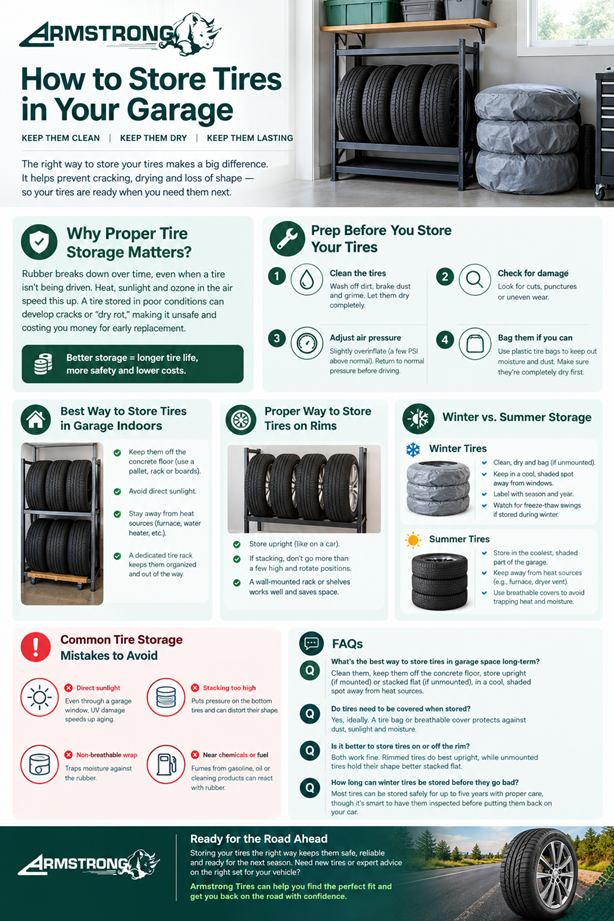
The best way to store tires in garage space is clean, dry, upright if they’re on rims, off the concrete floor, and away from direct sunlight or heat sources. Doing this keeps the rubber from drying out or cracking early, so your tires are ready to go whenever you need them next.
If you swap between winter and summer tires, you’ve probably got a spare set sitting in your garage right now. Maybe they’re leaning against the wall, maybe they’re stacked behind the lawn mower. It’s easy to overlook, but the best way to store tires in garage space actually makes a big difference in how long they last.
Tires that sit around the wrong way can dry out, crack, or lose their shape before you even get to use them again. Storing them properly, whether indoors or on rims, doesn’t take much extra effort. Here’s what actually works.
Why Proper Tire Storage Matters?
Rubber breaks down over time, even when a tire isn’t being driven on. Heat, sunlight, and ozone in the air all speed this up. That’s why a tire that’s been sitting in bad conditions for a year or two can develop cracks, or “dry rot,” before it’s ever worn out from actual driving.
This matters more than people realize. A cracked or brittle tire isn’t just less effective, it can be unsafe to drive on. And replacing tires early because they went bad in storage is money you didn’t need to spend. A little care now saves you a bigger cost later.
Prep Before You Store Your Tires
Before you tuck your tires away for the season, take a few minutes to get them ready:
- Clean the tires first – Wash off brake dust, dirt, and road grime with soap and water, then let them dry completely. Leftover residue can eat into the rubber over time.
- Check the tread and look for damage – It is good to spot cuts, punctures, or uneven wear before storage. Check for cuts, punctures, or any spots that look worn unevenly.
- Adjust the air pressure – Slightly overinflating tires (a few PSI above normal) helps them hold their shape while they’re not in use. Bring them back to normal pressure before driving on them again.
- Bag them if you can – Plastic tire storage bags keep out moisture and dust, and slow down oxidation. Just make sure the tires are completely dry before sealing them, since trapped moisture causes its own problems.
Do’s and Don’ts to Store Tires in Garage
| Do’s ✅ | Don’ts ❌ |
|---|---|
| Clean tires before storage | Leave dirt and brake dust on tires |
| Keep tires dry | Store wet tires in sealed bags |
| Use tire covers/bags | Expose tires to sunlight |
| Store off concrete floors | Place directly on concrete |
| Use racks or shelves | Lean tires randomly against walls |
| Store in cool, shaded areas | Store near furnaces or heaters |
| Store mounted tires upright | Stack mounted tires too high |
| Inspect tires before storage | Ignore cracks or uneven wear |
| Label seasonal tire sets | Forget storage dates |
| Keep away from chemicals | Store near gasoline, oil, or solvents |
Best Way to Store Tires in Garage Indoors
The best way to store tires in garage indoors comes down to keeping them off the ground, out of direct sunlight, and away from heat sources.
Keep them off the concrete floor. Concrete pulls moisture and can leach chemicals into the rubber over time. A wooden pallet, a tire rack, or even a couple of boards under them works well.
A dedicated tire rack or set of shelves is one of the easiest upgrades if you’re storing tires indoors every season. It keeps them organized, off the ground, and out of the way of foot traffic.
Avoid areas near furnaces, water heaters, or anything that generates heat or ozone. These accelerate rubber breakdown, even indoors, so pick a spot away from mechanical equipment if you can.
Proper Way to Store Tires on Rims
The proper way to store tires on rims is different from storing loose, unmounted tires, since the rim helps the tire hold its shape.
Mounted tires do best stored upright, the same way they’d sit on a car, rather than stacked flat. If you do need to stack them, don’t go more than a few high, and rotate their position every so often so the weight doesn’t settle unevenly on one spot.
If you have the space, a wall-mounted rack or a simple set of shelves keeps rimmed tires upright and off the floor without taking up much room.
Learn How the Weather Affects Your Tires and now we will discuss tire storage tips for winter and summers.
How to Store Winter Tires in Garage?
Once winter driving season wraps up, knowing how to store winter tires in garage space properly will help them come back in good shape next year.
Clean and dry them first, then bag them if they’re unmounted, or keep them upright if they’re still on rims. A cool, shaded corner of the garage away from windows works best, since prolonged heat and sun exposure through the off season is one of the main things that ages rubber early. Label the set with the season and the year, so you’re not guessing how long they’ve been in storage.
If you’re storing tires in garage space during winter itself (for a summer set, for example), the same rules apply, just watch for freeze-thaw temperature swings, which can make rubber stiffer and more prone to cracking if the storage spot isn’t insulated.
Best Way to Store Tires in Garage in Summer
The best way to store tires in garage space in summer is mostly about managing heat and sun. Summer garages can get hot fast, especially near windows or garage doors that face direct sun for part of the day.
- Store tires in the coolest, most shaded part of the garage.
- Keep them away from anything that generates extra heat, like a furnace or dryer vent.
- If you’re using plastic tire bags, make sure they’re breathable enough to avoid trapping heat and moisture together, which can lead to mold.
Common Tire Storage Mistakes to Avoid
A few habits can undo all your prep work:
- Storing tires in direct sunlight, even through a garage window, speeds up UV damage.
- Stacking mounted tires too high puts pressure on the ones at the bottom and can distort their shape.
- Using non-breathable plastic wrap instead of a proper tire bag can trap moisture against the rubber.
- Leaving tires near chemicals or fuel, like gasoline, oil, or cleaning products, since fumes can react with rubber over time.
FAQs
What’s the best way to store tires in garage space long-term?
Clean them, keep them off the concrete floor, and store them upright if mounted or stacked flat if unmounted, in a cool, shaded spot away from heat sources.
Do tires need to be covered when stored?
Yes, ideally. A tire bag or breathable cover protects against dust, sunlight, and moisture, all of which shorten a tire’s lifespan.
Is it better to store tires on or off the rim?
Both work fine as long as you store them the right way. Rimmed tires do best upright, while unmounted tires hold their shape better stacked flat.
How long can winter tires be stored before they go bad?
Most tires can be stored safely for up to five years with proper care, though it’s smart to have them inspected before putting them back on your car.
Conclusion
Storing tires properly isn’t complicated, it just takes a few extra steps most people skip. Clean them, keep them off the concrete, store them the right way depending on whether they’re on rims or not, and adjust for the season, whether that’s winter cold or summer heat. Do that, and your tires will be in much better shape the next time you need them.
If you’re due for new tires or want expert advice on the right set for your vehicle, Armstrong Tires can help you find the right fit and get you back on the road with confidence.